
Chlorine Taste and Smell in Dallas-Fort Worth Homes
A pool-like smell at the tap is the disinfectant your utility adds on purpose. Across Dallas-Fort Worth it is usually chloramine, a mix of chlorine and ammonia, added to control germs on the way to you.
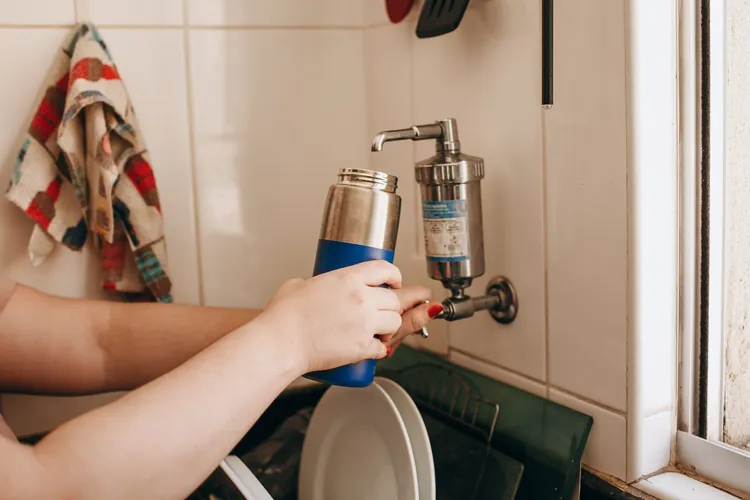
What Causes Chlorine Taste and Smell
EPA lists both chlorine and chloramines as water additives used to control microbes. Each DFW water quality report we reviewed lists the disinfectant level still in its water, and that leftover disinfectant is what you smell in a glass from the tap.
Chloramine is chlorine combined with ammonia. EPA says it provides longer-lasting disinfection as water moves through pipes, and that some systems switched to it to meet disinfection byproduct rules. More than one in five Americans drinks water treated with chloramines.
Chlorine and Chloramine in Dallas-Fort Worth Water
Every DFW water quality report we reviewed that names its disinfectant uses chloramine, and each one shows where its water sits.
Fort Worth and Southlake
Chloramine · 3.3 ppm average (Fort Worth, 2025) · 2.3 ppm average (Southlake, 2025 data)
Fort Worth adds monochloramines, chlorine and ammonia, to protect against harmful bacteria; its report shows a range of 0.93 to 4.7 ppm. Southlake buys its water from Fort Worth and reports its own average.
Dallas
Chloramine · 2.97 ppm average
Dallas Water Utilities says it uses chloramine instead of chlorine. Its 2025 report shows the total chlorine residual from 2.75 to 3.18 ppm.
Grapevine
Chloramines · 2.55 ppm average
Grapevine's 2024 report lists chloramines from 0.5 to 4.0 ppm over the year.
Plano (NTMWD Wylie Plant)
Chloramines · 3.19 ppm average at the Wylie plant
That is the 2025 average at the Wylie plant of the North Texas Municipal Water District, whose member cities include Plano, McKinney, Allen and Frisco. NTMWD also reports a small amount of chlorine dioxide.
Earthy or Musty Tap Water
Often algae in the source lake, not the disinfectant
Southlake's report traces earthy or musty tastes to naturally occurring algae in source lakes such as Eagle Mountain Lake. NTMWD measures two taste and odor compounds: geosmin, which causes an earthy, dirt-like odor, and MIB, which causes a musty, wet-mulch odor. Arlington says algae compounds in Lake Arlington are not harmful but can cause a noticeable taste.
Signs of Chlorine in Your Water
A pool-like smell or chemical taste in a glass of tap water, coffee, tea or ice. The same treated water runs to every shower and tub, so if you smell it at the kitchen sink, it is in your bath water too.
Is Chlorine or Chloramine in Tap Water a Problem?
The average levels DFW utilities report sit under EPA's 4.0 mg/L limit. EPA sets a maximum residual disinfectant level (MRDL) of 4.0 mg/L, the same as 4.0 ppm, for chlorine and for chloramines, and TCEQ explains that compliance is based on a running annual average of all samples collected in the distribution system, not on any single reading.
That is why a single high reading, such as the top of Fort Worth's 0.93 to 4.7 ppm range, is not the same as going over the limit. The DFW averages above run from about 2.3 to 3.3 ppm. An archived EPA Region 9 page also notes that many systems see fewer taste and odor complaints with chloramine than with chlorine.
How to Check for Chlorine at Home
Smell a glass of cold water straight from the tap. Read your utility's water quality report for the disinfectant it uses and its average level.
Chloramine behaves differently from chlorine at home; see the questions below on boiling and on letting water stand.
A free in-home water test checks chlorine along with hardness, iron and sediment, so you see the full picture before choosing a filter.
How to Fix Chlorine Taste and Smell
The fix depends on where the taste bothers you: every tap, or just the water you drink.
Whole-Home Carbon Filtration
The Water Quality Association calls activated carbon the most effective nonchemical method for removing chloramines. Carbon breaks chloramine down rather than trapping it, and WQA notes that a bed contact time of 10 minutes or more can be needed, so the system has to be sized for it. A whole-home carbon system treats water where it enters the house, so the shower and every faucet are covered.
Under-Sink Drinking Water System
If the taste only bothers you in drinking water, coffee and ice, an under-sink system treats that one faucet. For chloramine it needs activated carbon sized for the longer contact time, since reverse osmosis on its own handles chloramine poorly (see the questions below).
What to Look For in a Filter
EPA points homeowners to products certified to NSF/ANSI Standard 42 for taste and odor. On chloramine water, ask whether a product is rated for chloramine specifically, not only chlorine taste and odor. EPA also notes that activated carbon does not remove nitrates, bacteria or dissolved minerals, so a carbon filter is not a fix for hard water.
Chlorine Taste and Smell FAQs
Does my DFW city use chlorine or chloramine?
Chloramine, in every DFW water quality report we reviewed that names its disinfectant, including Fort Worth, Dallas, Southlake, Grapevine and NTMWD. Each one's level is listed in the local section above.
Does boiling water remove chloramine?
No. An archived EPA Region 9 page states that chloramines do not dissipate by boiling, so boiling will not take the chloramine taste out.
Will leaving water in the fridge get rid of the taste?
For chlorine, EPA's WaterSense guide suggests an open pitcher in the refrigerator for a day or two. For chloramine, the archived EPA Region 9 page notes that, unlike chlorine, chloramines do not rapidly dissipate on standing.
Does reverse osmosis remove chloramine?
Not well on its own. The Water Quality Association says chloramines are difficult to remove by reverse osmosis, and calls activated carbon the most effective nonchemical method.
Related Water Problems
Sources
- EPA: National Primary Drinking Water Regulations (disinfectants)
- TCEQ: Disinfectant Residual Reporting (MRDL compliance)
- EPA: Chloramines in Drinking Water
- EPA Region 9: Chloramine (archived January 2017)
- Water Quality Association: Chloramine Fact Sheet
- EPA WaterSense: Guide to Selecting Home Water Treatment Systems
- Fort Worth Water: Water Quality Report
- City of Southlake: Water Quality Report (2025 data)
- Dallas Water Utilities: Water Quality Information
- Dallas Water Utilities: 2025 Water Quality Report
- City of Grapevine: 2024 Water Quality Report
- NTMWD: 2025 Water Quality Report (Wylie WTP)
- NTMWD: Monthly Water Quality (taste and odor compounds)
- NTMWD: History (member cities)
- City of Arlington: Managing a Taste Issue with Tap Water (2023)
Book a Free In-Home Water Test
What happens next
- 1We test your waterIn your home, for hardness, chlorine, iron, and sediment.
- 2We recommend a systemA softener, filtration, reverse osmosis, or a combination. No pressure to buy.
- 3We install itClean, and we walk you through how it works.