
Iron and Rust Stains in Dallas-Fort Worth Homes
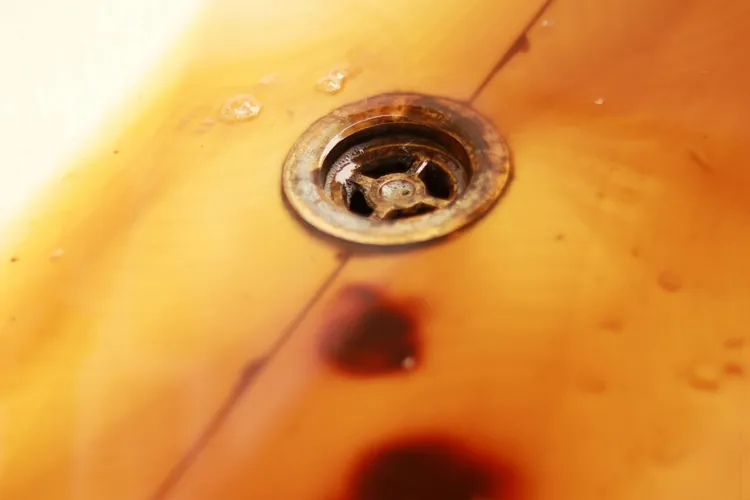
Orange, reddish-brown or yellow stains on sinks, tubs, toilets and laundry point to iron in the water. Black or dark brown stains can mean manganese is present too. Neither is known to cause health problems, but both stain.
What Causes Iron and Rust Stains
USGS calls iron a commonly occurring constituent of drinking water. It tends to add a rusty, reddish-brown, or sometimes yellow, color to water, and when the color is more black than red, the water may carry a mix of iron and manganese.
Iron stains often form after the water leaves the tap. The Water Quality Association explains that water in your plumbing often has limited contact with oxygen, which keeps dissolved (ferrous) iron and manganese in solution. Once the water comes out of a faucet and meets the air, the metals oxidize, and the oxidized iron and manganese are what stain.
Iron can also come from the plumbing itself. EPA notes that corrosive water can corrode iron and copper, which may stain household fixtures and add a metallic taste, and that metals such as iron can leach from pipes or fixtures. That is one possible source when your utility reports almost no iron.
Iron in Dallas-Fort Worth Water
The utilities below that report iron or manganese show very low levels, and Fort Worth does not list either on its water quality page. Private wells can be different.
Plano (NTMWD Wylie Plant)
Iron below detection · Manganese 0.002 ppm
Those are the 2025 figures for the Wylie plant of the North Texas Municipal Water District, whose member cities include Plano, McKinney, Allen and Frisco.
Dallas
Manganese 2.27 ppb average · 6.80 ppb high · Limit 50 ppb
Dallas Water Utilities reports those 2025 manganese figures against the 50 ppb secondary limit listed in its report. It does not list iron.
Grapevine
Manganese not detected (city plant) · 0.005 ppm (TRA water)
Grapevine's 2024 report gives one figure for water from its own plant and one for the water it buys from the Trinity River Authority.
Private Wells
Woodbine upper zone: "tends to be very high in iron"
Private wells are not covered by the Safe Drinking Water Act, so there is no utility report to check. For wells that draw from the Woodbine Aquifer in northeast Texas, the Texas Water Development Board says the upper zone yields limited water that "tends to be very high in iron."
Signs of Iron in Your Water
The stain color tells you a lot before any test does.
Kitchen
A rusty color or metallic taste in a glass of tap water. EPA lists both among the effects of iron above its guideline, and on private wells, USGS notes, iron's taste makes the water undrinkable for many owners.
Bathroom
USGS says dissolved iron in groundwater can stain sinks, bathtubs and toilets a brownish red.
Laundry
USGS names laundry among the things iron and manganese stain, along with plumbing fixtures and porcelain sinks.
What Iron Does to Your Home
EPA sets a secondary guideline of 0.3 mg/L for iron and lists its effects as rusty color, sediment, metallic taste, and reddish or orange staining. For manganese, the guideline is 0.05 mg/L, with black to brown color, black staining and a bitter metallic taste. WQA says staining can start at those same levels.
These guidelines are about how water looks and tastes, not safety. EPA does not enforce them and does not consider these contaminants a risk to health at those levels. The cost is stained porcelain and laundry.
How to Check for Iron at Home
On city water, CDC's advice is to contact your utility if your water comes out brown or discolored. On a private well, EPA recommends testing right away when you notice a change in odor, color or taste.
A free in-home water test checks for iron along with hardness, chlorine and sediment, so you know what is causing the stain before you buy anything.
How to Fix Iron and Rust Stains
Cleaning removes a stain; it does not remove the iron. When the iron is in the water coming into the house, the fix is to take it out before it reaches your fixtures.
Whole-Home Filtration
A whole-home filter at the point where water enters the house can take out iron, sediment and chlorine before the water reaches any tap.
When the Iron Comes From Your Pipes
If a test at your tap shows iron and your utility's report shows almost none, EPA's corrosion point suggests the iron may be coming from pipes or fixtures in the house, so treating the incoming water alone may not solve it. A free in-home water test measures the iron at your tap so you can make that comparison.
Well Water Treatment
For homes on a well, iron treatment is set up as one part of a well system, matched to what a test of your well water finds.
Iron and Rust Stain FAQs
Is iron in drinking water harmful?
USGS says iron and manganese can stain plumbing fixtures, sinks and laundry but are not known to cause health problems. EPA treats iron as a secondary contaminant, a matter of color, taste and staining rather than health.
How much iron in water causes stains?
EPA's secondary guideline for iron is 0.3 mg/L, and the Water Quality Association says staining can start at about 0.3 ppm of iron or 0.05 ppm of manganese.
Can iron in water clog pipes?
It can when iron bacteria grow. The Water Quality Association says iron bacteria may not be harmful to people, but they can clog pipes and affect flow rates.
Does Plano water have iron in it?
NTMWD, which supplies Plano, reported iron below the detection limit at its Wylie plant in 2025. If you still see iron stains, EPA notes that corrosion of iron in pipes and fixtures can also stain household fixtures, and a test at your own tap shows how much iron is reaching you.
Related Water Problems
Sources
- USGS: What can be causing our drinking water to have a reddish color?
- USGS: Drinking Water Taste and Odor
- EPA: Secondary Drinking Water Standards
- Water Quality Association: Staining and Discoloration
- NTMWD: 2025 Water Quality Report (Wylie WTP)
- NTMWD: History (member cities)
- Dallas Water Utilities: 2025 Water Quality Report
- City of Grapevine: 2024 Water Quality Report
- Texas Water Development Board: Woodbine Aquifer
- CDC: Preventing Waterborne Germs at Home
- EPA: Protect Your Home's Water
- EPA: Private Drinking Water Wells
- Fort Worth Water: Water Quality Report
Book a Free In-Home Water Test
What happens next
- 1We test your waterIn your home, for hardness, chlorine, iron, and sediment.
- 2We recommend a systemA softener, filtration, reverse osmosis, or a combination. No pressure to buy.
- 3We install itClean, and we walk you through how it works.